RESOURCE GUIDE
Supporting a loved one who has experienced sexual violence is both essential and emotionally complex. The most important aspects of your support should focus on belief and validation. Survivors often say that one of the most healing things someone can do is believe them without hesitation.
Additionally, it's crucial to help the survivor regain a sense of control, as sexual violence can strip away personal power. Healing often begins with restoring that sense of control. Make sure to listen more than you speak, and allow moments of silence; they can be just as meaningful. Remember that survivors may process their experiences in fragmented or non-linear ways.
As you support your loved one, be mindful of your own emotions. It’s normal to feel anger, sadness, or helplessness, but the survivor should not feel they need to comfort you. Familiarize yourself with professional resources that can assist them in their healing journey. Many free national and local resources are available to help. Having worked with many local rape crisis centers in South Carolina, I can’t express enough how incredible their support and services are. These professionals are true servant leaders who support victims and survivors in immeasurable ways.
Practice patience, as there will be days when your loved one seems okay and others when the trauma reemerges. Support them through both. Finally, consistently reassure them that they are not a burden. Many survivors fear being "too much." Remind them that you care and that they are not alone in this process.
How do I support a loved one who has experienced sexual violence?
First, thank you for caring about these issues. As a leader in this space, students reach out to me to share their feelings. They want to know that their institution cares, especially when they or someone they care about has been impacted by sexual violence. So, let me emphasize: you deserve to feel safe, supported, and heard. Safety, in all its forms, is the foundation of student success. I am a firm believer in this.
You can begin by utilizing the channels that already exist. Consider speaking with your institution's Title IX Office, the student affairs division, or a dean of students. You can also build strength in numbers by forming a coalition of students who care. This may take the shape of a student organization focused on sexual violence prevention or a committee within your student government association. Student voices should always matter.
It is essential to advocate for concrete, measurable actions from your school's administration. Achieving compliance is not particularly difficult, but we should not settle for basic programs that merely check a box. Colleges and universities need to create a comprehensive strategy that genuinely impacts how a campus fosters relationships, respects consent and boundaries, and supports those who have been harmed.
Education and awareness surrounding these issues must be ongoing—not just during orientation or an event during Sexual Assault Awareness Month. Please know that I am happy to discuss your concerns, goals, and how we can work together to make your campus a safer place. This work is far too important for us to ignore; it affects every campus in our country.
How can I get my campus to care about these issues? I am not seeing enough urgency from my school, and it makes me anxious.
Book Recommendations on Campus Sexual Violence
-
![Book cover titled 'Sexual Citizens: A Landmark Study of Sex, Power, and Assault on Campus' by Jennifer S. Hirsch and Shamus Khan.]()
Sexual Citizens by Hirsch & Khan
-
![Book cover for 'Blurred Lines Reconsidered: Sex, Power, and Consent on Campus' by Vanessa Grigoriadis, featuring large, gradient-text title on a black background.]()
Blurred Lines by Vanessa Grigoriadis
-
![Book cover titled 'Skiing for T' by Kate Harding with a large white A and the subtitle 'The alarming rise of rape culture—and what we can do about it'.]()
Asking For It by Kate Harding
-
![Book cover with red and black text, titled "Consent on Campus" by Donna Freitas, with horizontal lines above and below the title, some red and black lines, and a plain background.]()
Consent on Campus by Donna Freitas
-
![Book cover titled "Hear Our Stories" by Jessica C. Harris, featuring colorful silhouettes of diverse faces against a multicolored background with a blue border.]()
Hear Our Stories by Jessica C. Harris
-
![Book cover titled "Missoula: Rape and the Justice System in a College Town" by Jon Krakauer, featuring a photo of a university building in Missoula, Montana, with snow-covered trees and a clock tower, set against a blue background.]()
Missoula by Jon Krakauer
-
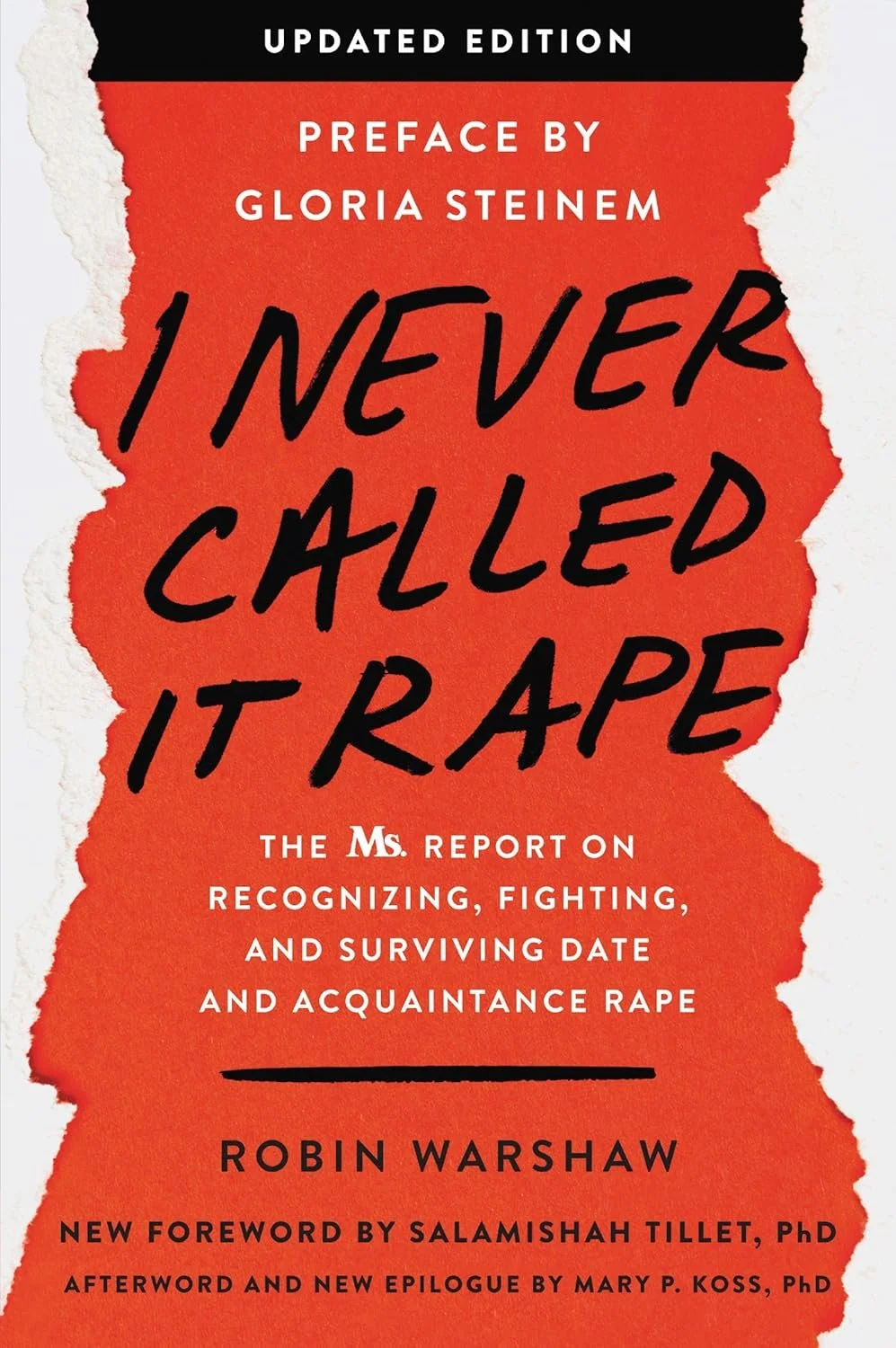
![Book cover titled "I Never Called It Rape" by Robin Warshaw, with a red torn paper design background, and additional text about the book's contents and forewords.]()
I Never Called It Rape by Robin Warshaw






Book Recommendations on Trauma and Healing
-
![Book cover titled 'Dispatches from the Couch' by Stacey Hetties, featuring a white sofa with gray pillows, a pink brain illustration on the sofa, and a small pink wire basket, set against a yellow wall.]()
Dispatches from the Couch by Dr. Stacey Hettes
-
![Book cover titled 'Know My Name: a memoir' by Chanel Miller with a dark teal background and yellow abstract lines.]()
Know My Name by Chanel Miller
-
![Book cover titled 'We Are the Evidence' with subtitle 'A Handbook for Finding Your Way After Sexual Assault' by Cheyenne Wilson, featuring a pastel-colored gradient background.]()
We are the Evidence by Cheyenne Wilson
-
![Cover of a book titled "The Body Keeps the Score" by Bessel Van Der Kolk, M.D., with a blue background, an abstract illustration of a black human figure, yellow star-shaped symbols, and the Penguin logo.]()
The Body Keeps the Score by Dr. Van Der Kolk
-
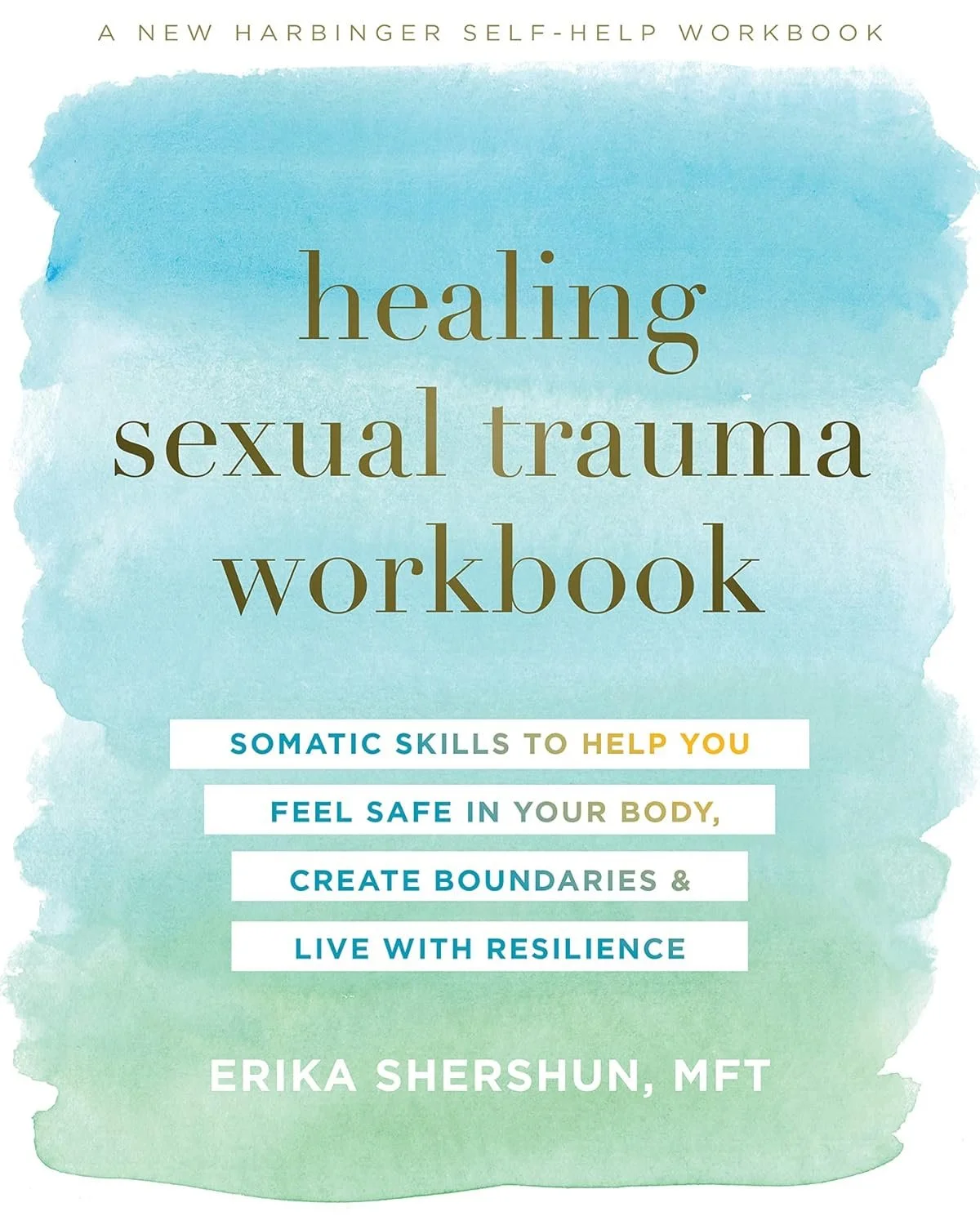
![Book cover titled 'Healing Sexual Trauma Workbook' with a blue and green watercolor background, subtitle about somatic skills, and author Erika Shershun, MFT.]()
Healing Sexual Trauma Workbook by Erika Shershun
-
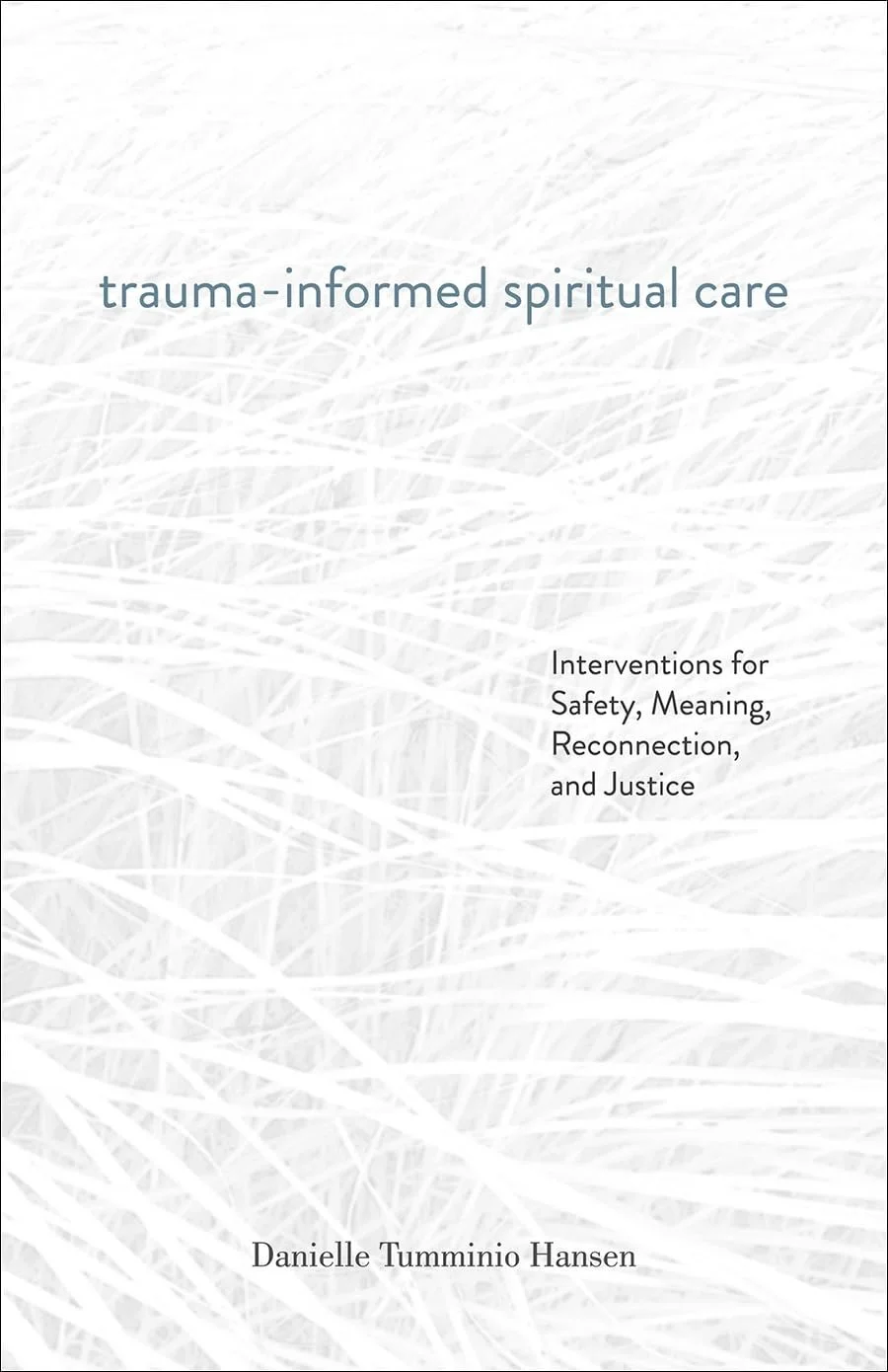
![Book cover titled 'trauma-informed spiritual care' with subtitle 'Interventions for Safety, Meaning, Reconnection, and Justice' by Danielle Tumminio Hansen with a background of white abstract lines.]()
Trauma-Informed Spiritual Care by Danielle Tumminio Hansen
-
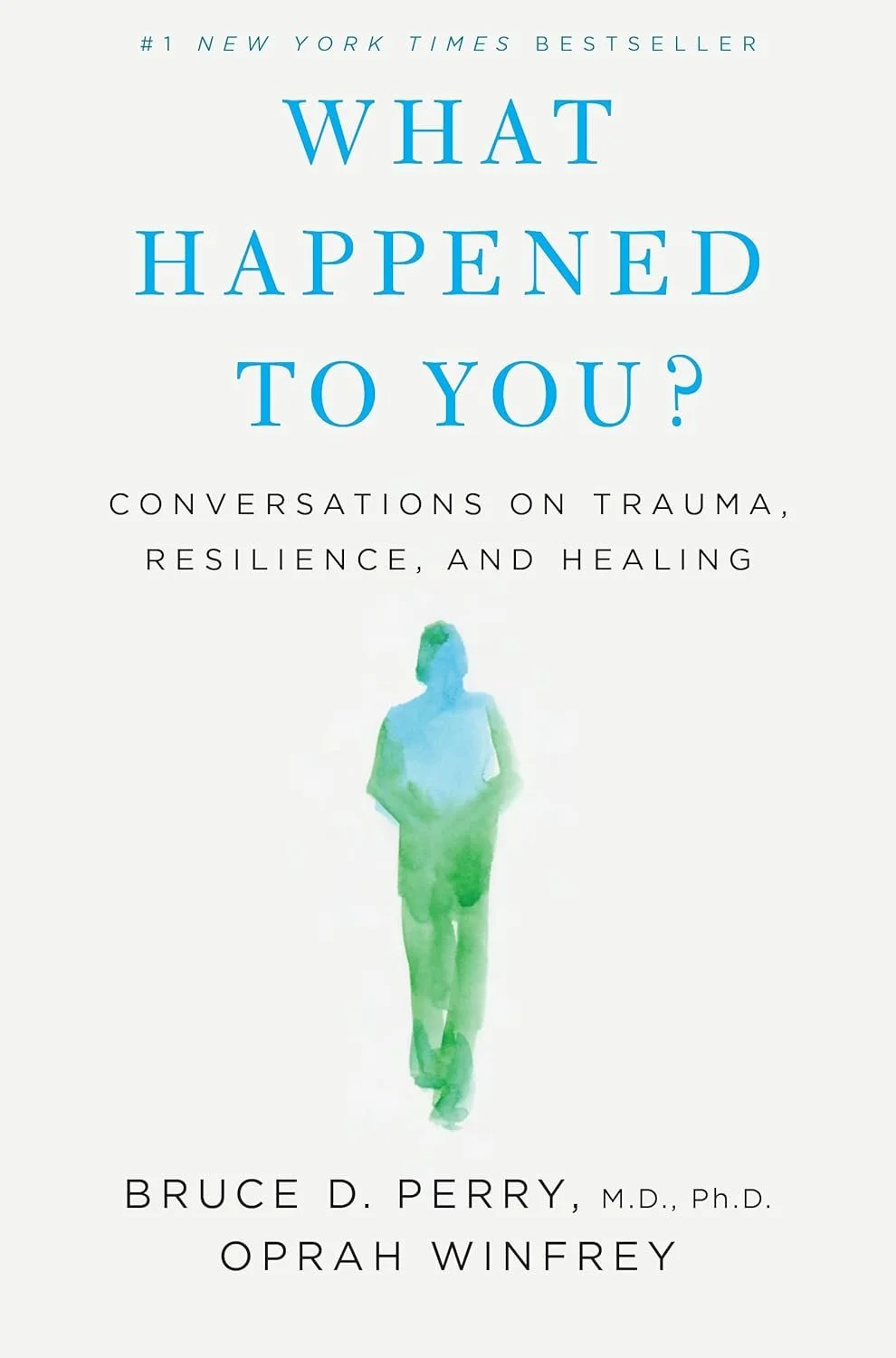
![Book cover titled "What Happened to You? Conversations on Trauma, Resilience, and Healing" by Bruce D. Perry and Oprah Winfrey, featuring a watercolor illustration of a person walking, in shades of blue and green.]()
What Happened to You by Dr. Bruce Perry & Oprah Winfrey




-
National Domestic Violence Hotline
1-800-799-SAFE (7233)
-

Love Is Respect
-

RAINN